
Time to read
This year’s theme is change. I did my first year of my PhD by moving away from my hometown, about ten thousand km away. From never asking about the weather to asking people I met about when I would see the sun again, because the sun used to be a constant throughout the year. Although it is not my first time being abroad for a long period, it is my first time I ‘built’ my living space since it didn’t come with anything but the kitchen appliances.
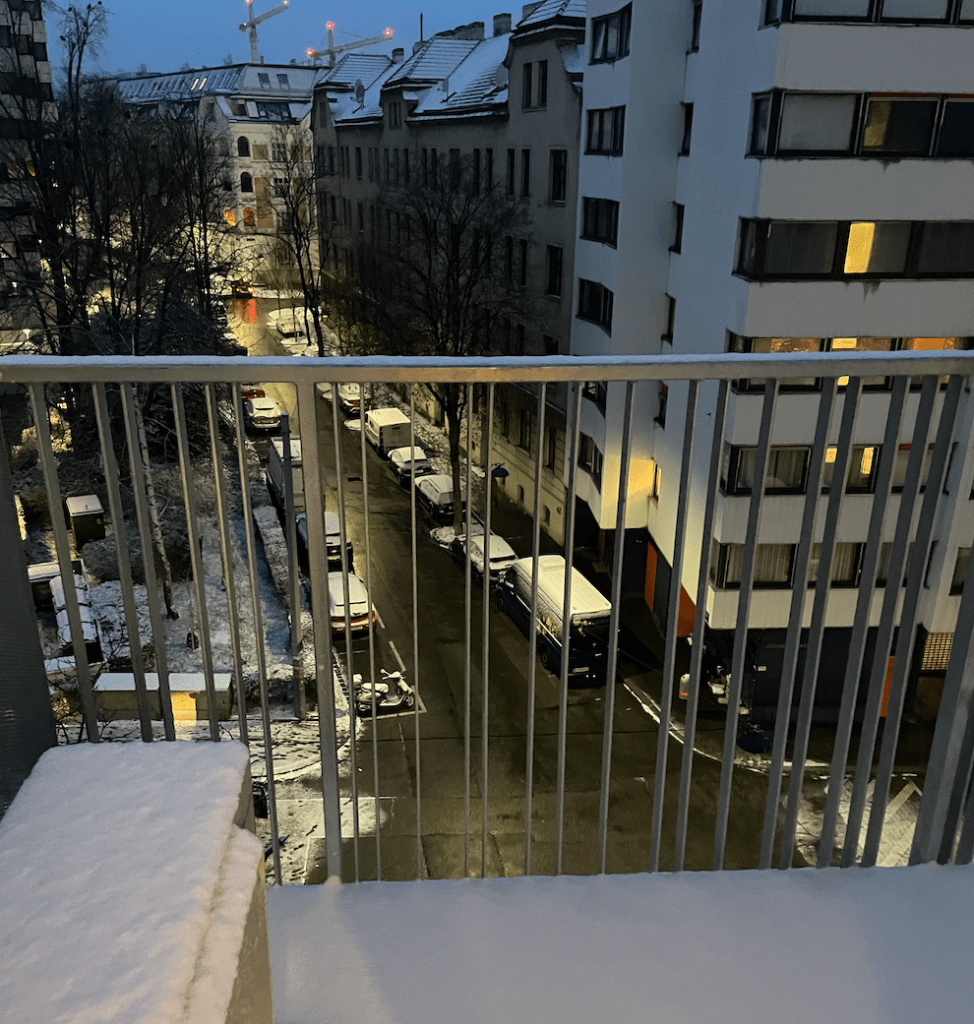
first snow I experienced in Vienna
Part 1: Experiencing changes
2025 were full of big changes: I started the PhD, moved into a new flat, started to speak different languages at the office and around the city, used a different currency to purchase stuffs.
In the previous years, I documented my days in quite detail by journaling every day. This year, I thought doing so will make me more rigid and less open to change. I was wrong. To be able to withstand constant change, I actually need more ‘constant’—the things that don’t change. But I also know that pushing myself to document every change that I experience would not be too punishing. This year, I think I learn that both thoughts can be true at the same time. I was wrong to think I won’t need a constant, but I was also right that journaling every day is too much of a burden to be my constant to navigate the chaotic 2025.
The contrasts: fast-slow and uncertain-certain
Although the year seems fast, it also feels slow. This PhD has forced me to unhaste a little bit. There is no paper to be produced in the first year. There is a loud quietness in between. The strength to resist being distracted in this gap is something I am currently learning each day. Research is a long journey. I miss finishing something; maybe more of the dopamine rush after finishing my creation. It could be a research project that I used to present at work, a painting, a cookie, or even a highly curated social media post that I made to broadcast that I’m alive and well to my friends back home.
Since the academic work is a long process, it’s become more apparent that I need longer attention span and longer tenacity to work on the same thing. Unfortunately, my attention span has dwindled significantly since the years of working in corporate startups, where everything has to be swift. “Move fast, and break things,” they said. But what if the industry I am in now does not tolerate things being broken the very first time?
The stability of living with a decent wage in a city where the public services actually work offsets something different in my working style. These nagging worries are gone: The usual worry of being disturbed by the internet cutting off repeatedly in the midst of doing something; the worry of not being able to make it to the workplace on time due to the heavy rain-caused traffic jams; and the constant juggles of “maybe I should take another freelance job to increase my saving” in the middle of a bureaucratic meeting that should’ve been an email.

I am grateful for it. Yet, I came to the conclusion that this chapter of my life requires a different self to navigate.
Imagine a boat that usually floats on a small canal. It has several holes. But due to its small size, the sailor can always cover for it by throwing away the water that gets into the boat with a bucket. Now that the ship somehow makes it to a big river. The sailor wonders how on earth this tiny ship with her can make it. A little complaint in a sense, but also framed with a sense of gratitude that she can now witness the “vast world” that she has seen in the storybooks. She needs to reinforce her boat; otherwise, she will sink.
Changing can also mean looking at the same thing differently
The good intangible thing that I learn this year is that I understand how things can be differently correct at the same time. I am reminded of this picture circulating over the internet a while ago:

The first time I encountered this image, I kind of felt that I knew what it meant: people see things differently. But now, I get a better understanding of it. Different perspectives about the same event can exist at the same time, and it resides within me. And it is okay to jump over these different perspectives whenever I need to.
I think this has become more apparent to me due to the nature of my research being interdisciplinary. I need to switch the gears in my head when I read papers from psychology compared to statistical physics. Indirectly, I apply this kind of thinking to myself: perspectives become buttons that I can toggle on and off.
Maybe I used to think that cooking is a waste of time, but on the other hand, it isn’t if I’m prioritising the nutritional value over time. Or I used to think that anything quantifiable in research takes too long to be meaningful when I worked at companies, but not if you see the quantifying things as a way to make convincing information to policymakers taking a bet that matter to thousands or even millions of lives. Now I see the context as the source of light to see things in different ways.
There is more than one truth in the way I see an event and also myself. Another example, I can be a quiet Lasmi who likes to observe more than to talk because a) I was not that confident, or b) I liked to be prepared fully before I talk. The a) truth is good to have when I want to see which areas I need to be improving. But the b) truth is also good when I prep myself up for a networking event that requires a lot of talking, so I know what to do to navigate my tendency to be quieter and reap more of the benefits. Surprisingly, being in academia requires a lot of socialising and presenting my works to people. It is good to know that I can switch how I see things and become more confident.
Part 2: Lessons learned
As a researcher, the main research tool is yourself. This year, I’ve noticed that I need to reinforce some things that were ignored for too long: 1) building up my attention span for reading long texts, 2) taking deeper breaks to rest, and 3) changing how I approach coding tasks.
A wide vs. narrow attention
Social media has been my source of small joys in between the bleakness of living conditions back home. When things are frustrating, and I can’t do anything about it, a sense of relatedness with random strangers through memes can lighten up the day. Although now living in Vienna has made it less likely that I complain about the bad public transport and unpredictability of how long the journey is going to take me during the heavy rains, I still feel a glimpse of loneliness. I still need that dopamine hit to reassure myself that I am not insane for being different. Like, thinking that it is a waste if I order the same dish as my friend’s at a dinner table, as collectively, it makes the variety of the dishes lesser and somehow I believe we collectively are willing to share dishes.
The inside jokes on social media are like my ‘cigarette’ breaks. On the other hand, research has shown that the cost of short-form contents is my attention span. Switching on and off between tasks and social media would be detrimental to my ability to endure reading long articles for my research job. It is getting better now, or so I hope. But I found the first month of starting to read papers a bit harsh. Only until the end of the year I realise that writing down, or scribbling during reading, helps me focus. It reminds me of when I was at school; none of my textbooks were safe from my doodles! Maybe I always have too big an observation space when seeing something, and the scribbles help me block out the unnecessary space.
It seems that the wide field of view that I adopted more during my working years was more beneficial than a narrower one. Now it is the opposite. Good thoughts only exist after at least fifteen minutes into reading, I feel.
Deeper thoughts need deeper breaks
It is easy for me to get frustrated after doing a longer session of work. And it’s rather easier not to have a decent enough break after logging off from it. I find it hard to destress from work if I am just staying at home and doing routines. It makes me strive to go somewhere else completely different to ‘reset’ my worldview altogether. Although the working hours here is lesser than back home since I rarely had to do overtime, it feels more intense.
However, I also realised that it is impossible to completely detach from my work even during non-working hours. Sometimes ideas come outside of working hours. Yet, I don’t want to get burnout. Usually, I just note it down on my mobile notes with a follow-up task for later use.
I know that it’s not ideal to directly work on something after I decided that it is the ‘break time’ because it will make me think that the work never ends. It does not end, but I need to believe that rest can be better and work is more appealing after I stop for a while. I am still working on it.
On a good note, I am fortunate enough to visit asian countries I never got a chance to visit, even when I earned the top percentile of salary for my work age back home. It felt nice to be somehwere else where their default is my default. It feels easier to navigate uncertainties there, even when I can’t even read the characters.
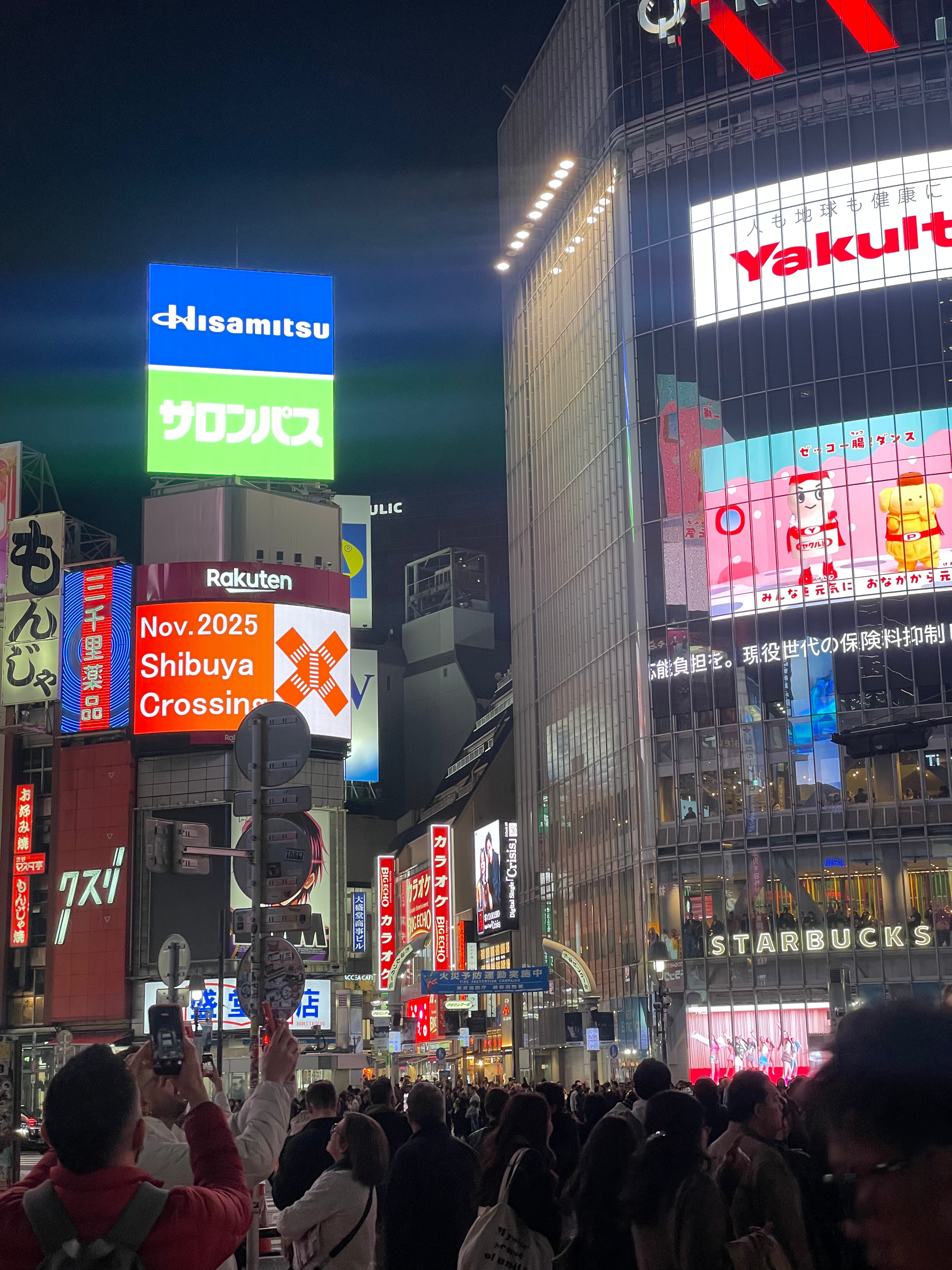
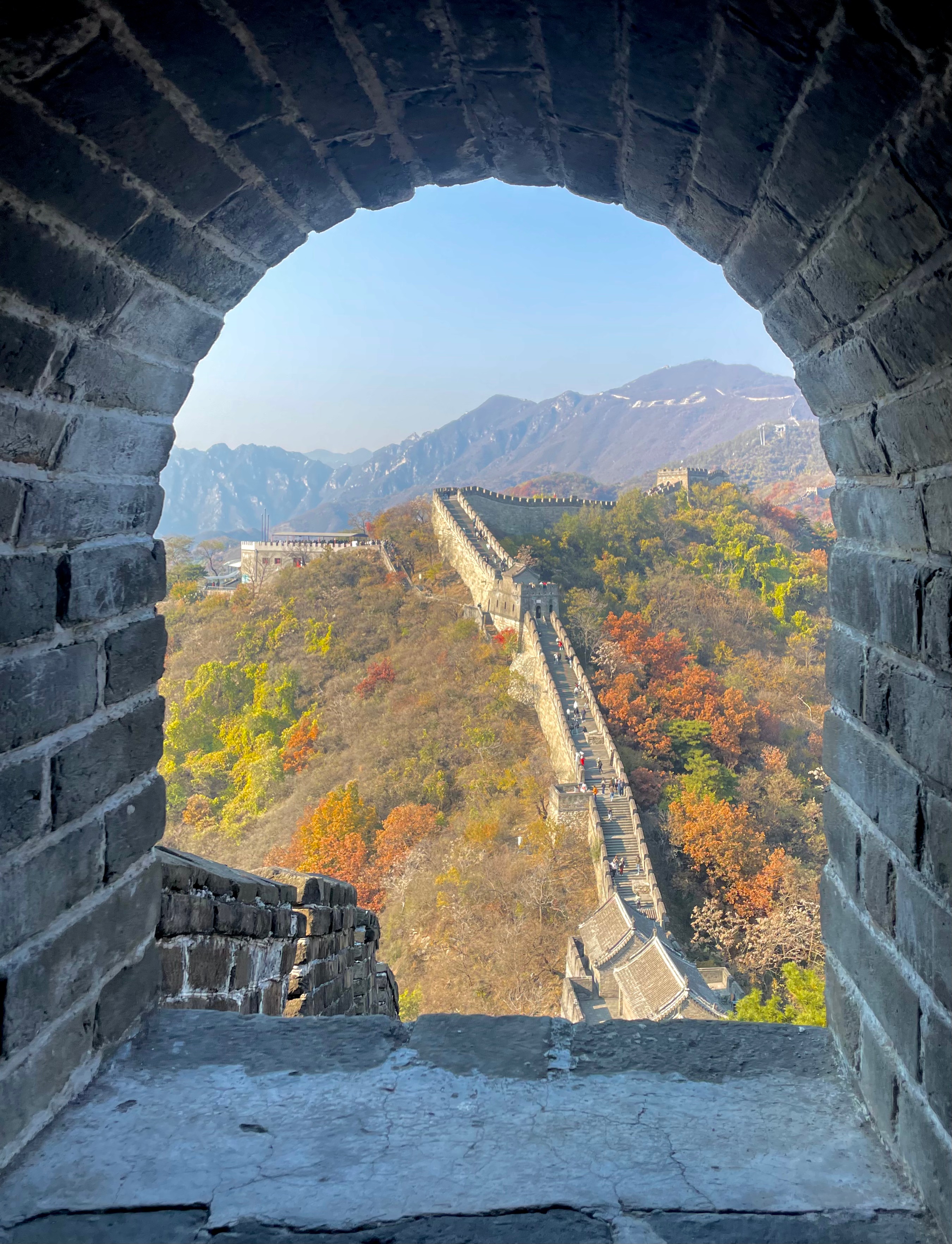
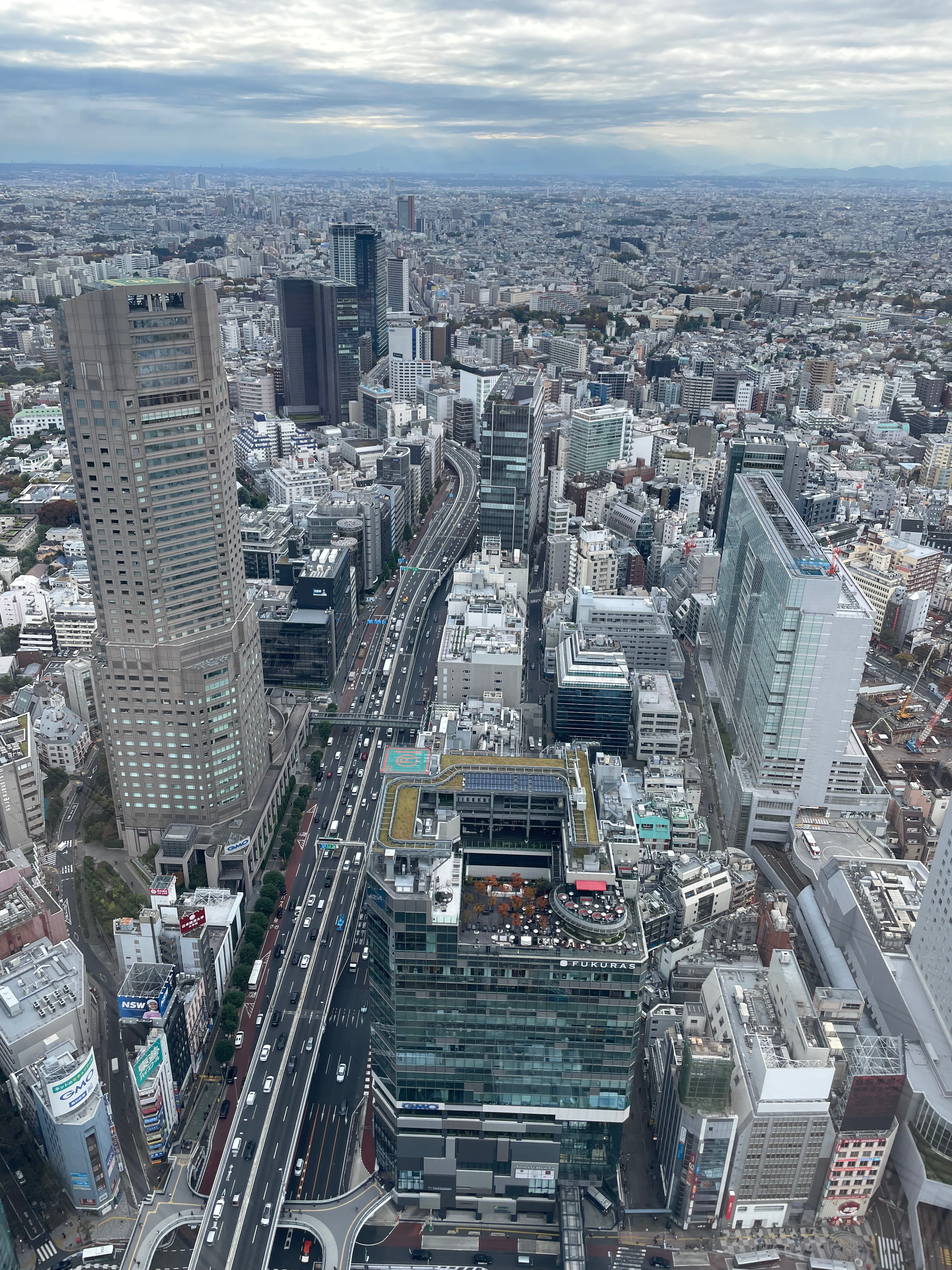
Getting good with coding, some tips I wished people told me before
This year, I personally felt that it ‘clicked’ in my head on how to code. I was an anxious coder. I panicked a lot when I got an error when executing my codes. I feel pretty lucky for being born in the right era, where I used to learn coding without any AI but now I can freely utilise AI to help me code.
I think the main things to master before anything else to help me code better are: 1) to understand how to read an error message, 2) to be okay not understanding everything, and 3) to work on an easy project I can build directly. Ultimately, if you can be a bit more decisive and not optimise for everything all at once, that’s the best way to learn.
AI helps me a lot to decipher the error message. I mean, to be fair, the error messages look very robotic with lots of phrases that a beginner won’t know. Copying and pasting them to chatgpt for example, helps me to understand concepts that I won’t be aware of. I then ask it to explain in a way that helps me learn how to code, so no simple solution fixes. AI is like my anxiety reliever because it speaks in natural language that I understand.
A friend of mine ask me whether it is easy to learn Python from SPSS, a popular choice of statistical analysis software in social sciences. This question makes me think that the hardest part about learning python to code is to be okay that you don’t understand everything in the beginning. At first, you need to set up your work environment, including installing the Python with other dependencies and choosing an IDE (Integrated Development Environment), like the Microsoft Word for writing something. In R, people would normally just use RStudio, for example. But with Python, there are various choices.
However, it is hard to know what situation you are in and which things to install. It can be hard to digest in the beginning, so just choose one IDE and stick with it. You can always change later when you need to. I used to work with Jupyter notebooks until I need more functionalities then I moved to Visual Studio Code. If the work requires you to install some packages, just get the high level overview of what it does and remember that everything is reversible. For me, it is easier to ask chatgpt to explain what a package does rather than browse substack for troubleshooting common issues.
Lastly, start a project as soon as possible if you ‘think’ that you might be able to do it. This will give you opportunities to make mistakes and to make yourself aware of other concepts that might not be taught at any online courses. It will usually take longer to finish that project, but that’s how it is. You will experience a lot of frustrations, of course. However, having a tangible outcome you are expecting to have in the end will push you forward. I guess I learned by doing my study. I’ve been working on using otree framework to code group experiments. I didn’t know it was that complicated, but looking back, it enabled me to push through because I thought it’s gonna be easy.
Now, I am working on a side project to create a website that will help me think of what dish to cook given an ingredient based on previous dishes I’ve cooked. It helps me learn how to deploy a website usign mkdocs and vercelapp.
You can take a look here https://lasmi-recipe-finder.vercel.app/ (it is for my personal use, so I don’t have measurements for the ingredients—it’s the asian way lol)

End: Things that I look forward to
The second year of my PhD and living here will probably a bit easier, but also I want to do more stuffs. It is time to come back to daily journaling again to create a ‘constant’ that can be my foundations before exploring other things. Since I miss the sense of fulfillment after creating something, I look forward to draw more, write more, and do other stuffs that can fill my ‘creativity tank’. Baking maybe?
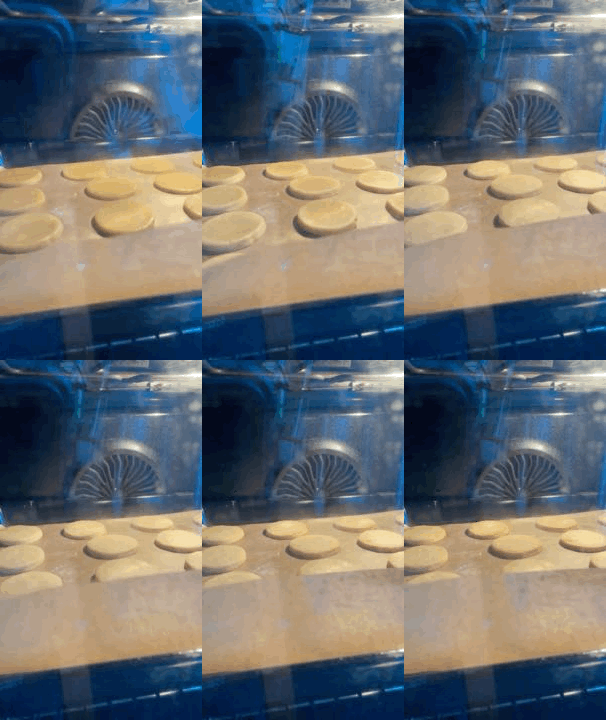
It has been quite a journey this year. I hope that the unchanging physical reality in 2026 will help me settle in and still inspire me to look at things differently. See you at the end of this year 🙂
 Lasmi's Thoughts
Leave a comment